Key Takeaways
- Backup lights work only when they are always packed, easy to find, and protected from accidental activation.
- A tiny light is enough if it can help you move slowly, read instructions, or signal for help.
- The best location is a fixed safety pouch, hip-belt pocket, or top pocket, not a random gear pile.
- A backup light protects phone battery by keeping your phone available for maps and emergency contact.
How this guide was built
Fopoto reviews backup light for hiking: compact safety guide through a compact-kit lens: brightness, runtime, beam pattern, backup power, and visibility after dusk. We start with the safety baseline, then cut anything that adds bulk without covering a realistic field problem. This guide is written for the practical search intent behind best backup light for hiking and related questions like backup lights for day hikers, emergency flashlight for hiking, small hiking safety light.
Editorial PolicyBackup Light for Hiking: Compact Safety Guide is not about buying more gear. It is about building a small, repeatable system for day hikers that still works when the day gets longer, colder, wetter, or more confusing than planned.
| Layer | What it covers | When to pack it |
|---|---|---|
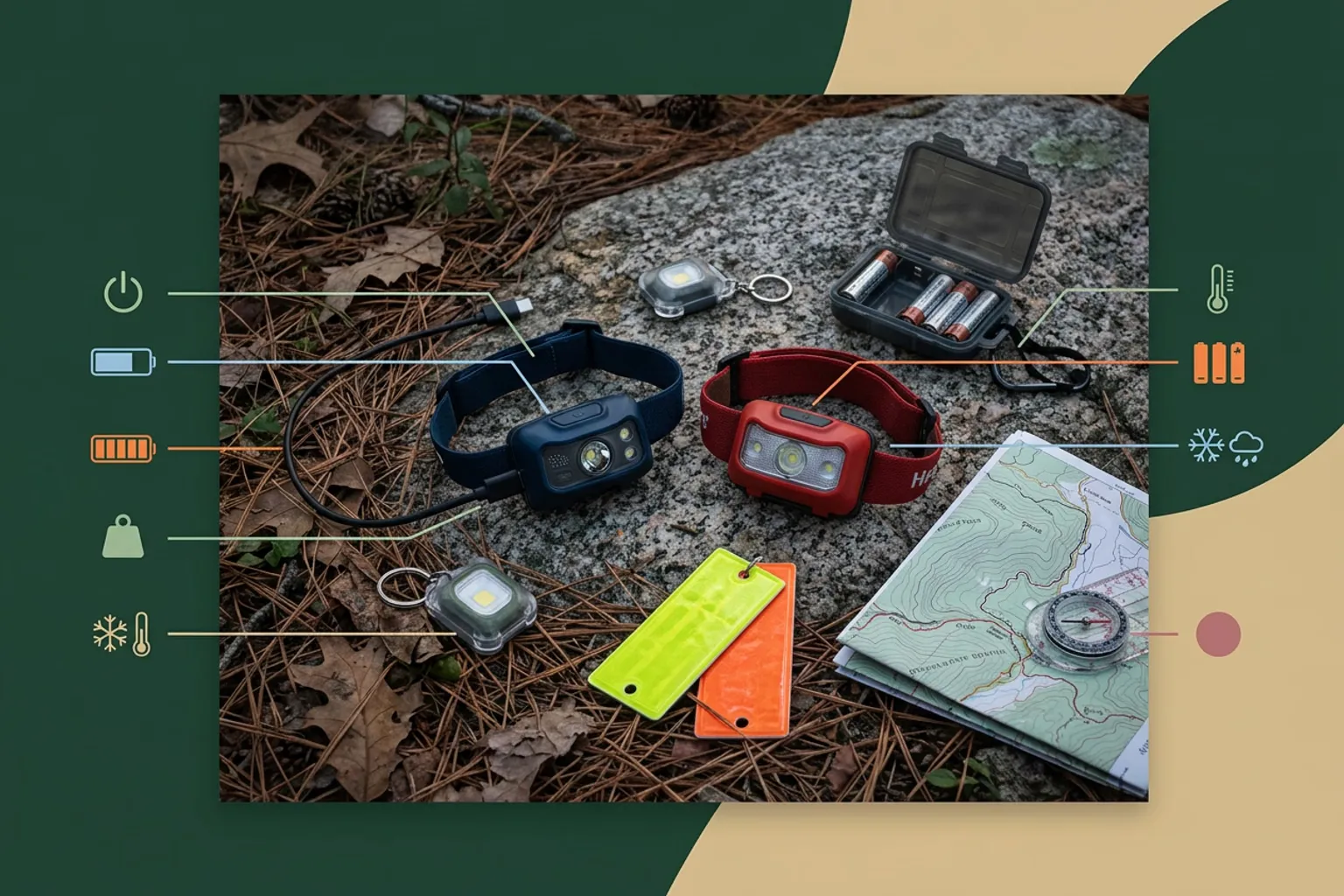
| Coin-size key light | Emergency visibility and map reading | Always-packed backup |
| Mini headlamp | Hands-free slow walking | Longer late finishes |
| Small flashlight | Directional beam and signaling | Day hikers and volunteers |
| Phone light | Last resort only | Avoid as primary backup |
What should you pack first for day hikers?
Start with the safety baseline: light, water, weather protection, navigation, first aid, and a way to signal for help. The National Park Service describes the Ten Essentials as ten systems, not ten bulky objects, which is useful for compact packing because each item can be scaled to the trip.
For backup light for hiking: compact safety guide, the best first move is to choose the smallest version of each safety system that still works when plans change.
What can go wrong in the field?
The ordinary problems are the ones worth designing around: a late return, a light that steps down too quickly, glare that ruins footing, or a battery that is not charged when the trail gets dark. None of these require a huge expedition kit. They do require redundancy in the few places where failure matters.
Fopoto's rule is simple: if one item failing could strand you, make that item redundant or choose a more reliable version.
How do you keep the setup compact?
Choose gear that earns its space twice, then apply the carry rule for this guide: choose one primary light you enjoy using and one tiny backup that lives in the same pouch. A rain shell blocks wind as well as rain. A buff can cover sun, cold, dust, and sweat. A USB-C light pairs with the same power bank as your phone. Compact does not mean fragile. It means every item has a clear job.
The best compact kits feel boring on purpose: fewer loose parts, fewer decisions, and fewer chances to forget something important.
What mistakes should beginners avoid?
The most common mistake is packing for imagined drama while ignoring routine discomfort. People bring extra gadgets but forget blister care, spare calories, dry storage, or a backup light. Another mistake is trusting a phone for every job. Phones are useful, but battery life is not a safety plan.
Before adding gear, ask what specific problem it solves and whether something already in the kit solves that problem better.
Compact checklist
- Main safety item for the route, season, and time of day.
- Specific plan for a late return, a light that steps down too quickly, glare that ruins footing, or a battery that is not charged when the trail gets dark.
- Backup light or backup power if the trip can run late.
- Weather layer that works for both wind and rain.
- Small first aid and blister kit sized for the group.
- Navigation backup that does not depend only on cell service.
- Carry rule: choose one primary light you enjoy using and one tiny backup that lives in the same pouch.
Frequently asked questions
Where should I pack a backup light?
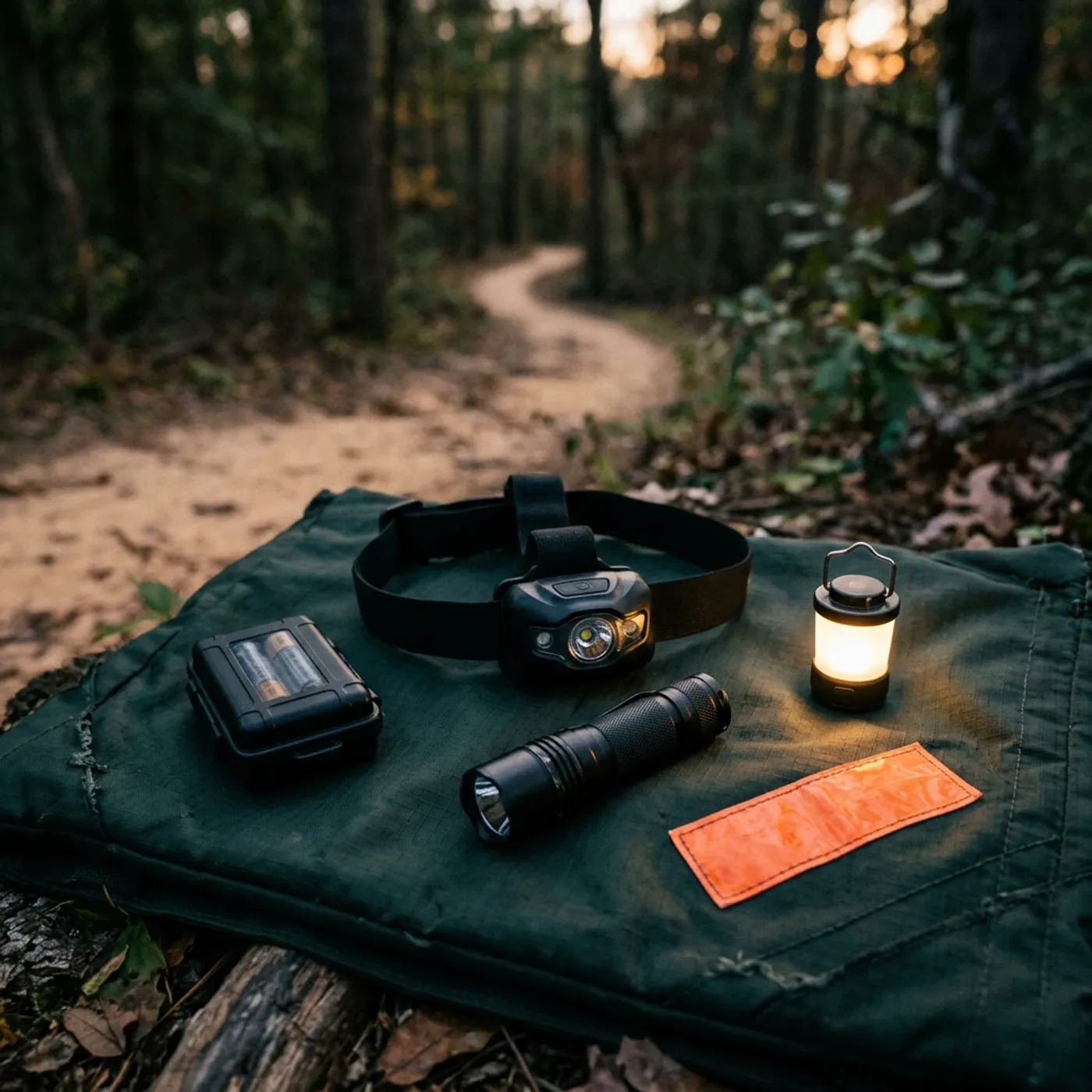
Pack it in the same safety pouch every time, or in a top pocket you can reach without unloading the bag. The goal is to find it in the dark with cold or tired hands.
Can my phone be my backup light?
A phone can help briefly, but it should not be your only backup light. Phone battery may be needed for maps, calls, photos of junctions, or emergency messages.
How bright does a backup light need to be?
It does not need to be extremely bright. It needs enough low or medium output to walk slowly, check a map, find gear, and signal until you are safe.
Sources
- National Park Service, Ten Essentials , retrieved June 29, 2026. Used as the safety baseline for compact outdoor packing systems.
- American Red Cross, First Aid Kit guidance , retrieved June 29, 2026. Used for first-aid kit scope and emergency-preparedness checks.
- Fopoto Editorial Policy, updated June 29, 2026. Explains the scenario-first review method, AI-assisted image disclosure, and source standards.
By
Fopoto Field Desk
Updated June 29, 2026 / 5 min read